
Venezuela Earthquake 2026
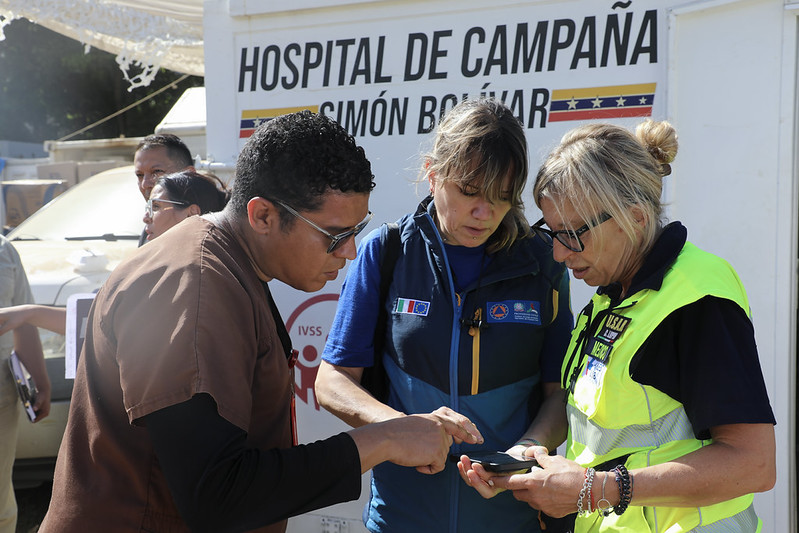
On June 24, 2026, two earthquakes measuring 7.2 and 7.5 in magnitude struck northern Venezuela just seconds apart, with their epicenters located in the state of Yaracuy.
The greatest damage was concentrated along the country's coastline, with the city of La Guaira, north of Caracas, experiencing the most severe effects of the two earthquakes. Hundreds of buildings either completely or partially collapsed, and thousands more have been damaged, including several strategic structures such as hospitals and airports. The situation appeared dramatic from the very beginning, with hundreds of confirmed casualties and thousands of people reported missing, including dozens of Italians. The seismic events were followed by numerous aftershocks, complicating emergency interventions.
On June 25, the Government of Venezuela submitted a request for support through the Union Civil Protection Mechanism (UCPM). In response, the National Civil Protection Service was activated to assist. On July 2, the Council of Ministers declared a state of emergency for the Italian response in areas affected by the earthquakes. This decision was made at the proposal of the Minister for Civil Protection and Maritime Policies, Nello Musumeci, and at the request of the Minister of Foreign Affairs and International Cooperation, Antonio Tajani.
The Civil Protection Department, in collaboration with the Ministry of Foreign Affairs and International Cooperation, coordinated the deployment of personnel and aid. The resources, in coordination with the Italian Embassy and Venezuelan authorities, were focused on areas that have reported the most damage.
On June 26, the Italian Air Force launched its first flight, carrying 37 operators from regional health services, 25 firefighters specialized in search and rescue operations, a group of 12 members from the Technical Assistance and Support Team (TAST) dedicated to logistical and cartographic support, representatives from the Crisis Unit of the Ministry of Foreign Affairs, and a team from the Civil Protection Department. This team was responsible for coordinating the various operational groups involved in the mission. In particular, the Urban Search and Rescue (USAR) units of the Italian National Fire and Rescue Service were tasked with assessment, search, and rescue operations in urban areas of the La Guaira region.
Healthcare professionals from the Cross-Remote Centre for Health Rescue Operations of Pistoia, along with regional health services from Piemonte, Lombardia, Veneto, Emilia-Romagna, Toscana, and Lazio, were actively engaged in hospitals in Caracas and La Guaira, assisting local doctors and nurses to provide care for the population.
On June 27, a second aircraft from the Italian Air Force took off, transporting self-supporting tents for humanitarian aid, along with materials needed to complete the TAST module. On board were also 11 members of the European Union Civil Protection Team (EUCPT) and additional personnel from the Italian National Fire and Rescue Service to support the units already operating in the area.
On July 3, a new Italian Air Force flight departed carrying medical personnel, equipment, medicines, and medical devices for the newly established aid station at San José Hospital in La Guaira, which has been set up to provide care to the local population.
The flight also brought in a new team of healthcare workers, comprising six professionals from the Pistoia Cross, who have taken over from the staff previously on site. In addition, a partial rotation of the firefighters who had been on duty was carried out.
Venezuela earthquake / 2026
