
Environmental monitoring
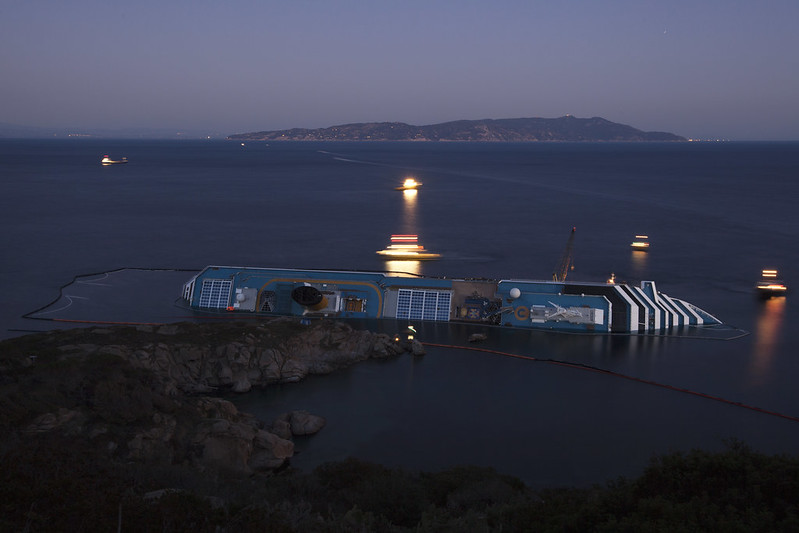
The Deputy Commissioner implements several measures, in collaboration with various institutions, agencies, and public authorities, aimed at monitoring environmental quality and establishing measures to prevent any release of pollutants from the ship.
Local pollution prevention plan. One of the first measures implemented is the Port Authority’s local pollution prevention plan, which involves the deployment of absorbent booms around the ship to contain any potential fuel spills. A plan is also in place for the active recovery of any pollutants using absorbent and containment booms, as well as for shoreline cleanup operations.
Marine and terrestrial environmental monitoring. The water monitoring plan is designed to detect any fuel leaks or other potential pollutants originating from the ship. ARPAT - the Regional Environmental Protection Agency of Tuscany is responsible for the monitoring, in collaboration with ISPRA - the Italian National Institute for Environmental Protection and Research. The plan calls for water sampling at various points - at the bow, stern, and on the starboard and port sides of the ship, as well as near the island’s desalination plant - using a sampling point located one mile offshore as a reference. In addition to ARPAT and ISPRA, La Sapienza University of Rome and the company D’Appolonia, commissioned by Costa Cruises, also conduct monitoring in the affected area. In addition to water monitoring, air quality and noise levels are also monitored, and surveys are conducted to assess the island’s terrestrial ecosystems and architectural heritage. These environmental monitoring systems are complemented by additional techniques based on satellite imagery, such as reprocessed COSMO-SkyMed data, and aerial remote sensing.
Onshore measures. During the debunkering phase, pollution prevention measures are also implemented onshore. Coastal municipalities are encouraged to adopt and implement response plans in the event of an oil spill. To this end, the Civil Protection Department, in collaboration with ISPRA, Legambiente, and local institutions, organizes training courses for volunteers and local authorities on coastal cleanup techniques.
Marine ecosystem restoration. Once the ship has been removed, all activities aimed at restoring the marine environment to its pre-intervention condition are initiated. Upon completion of this phase, a five-year monitoring program is implemented, focusing in particular on those environmental components that require the longest time to return to their original condition.