
The stages of the emergency
- Past Event
- Event in progress
- Future event
The accident
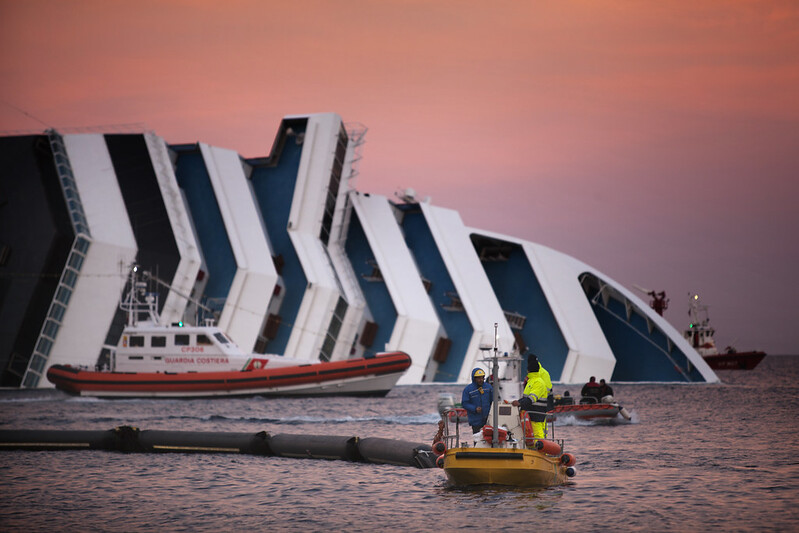
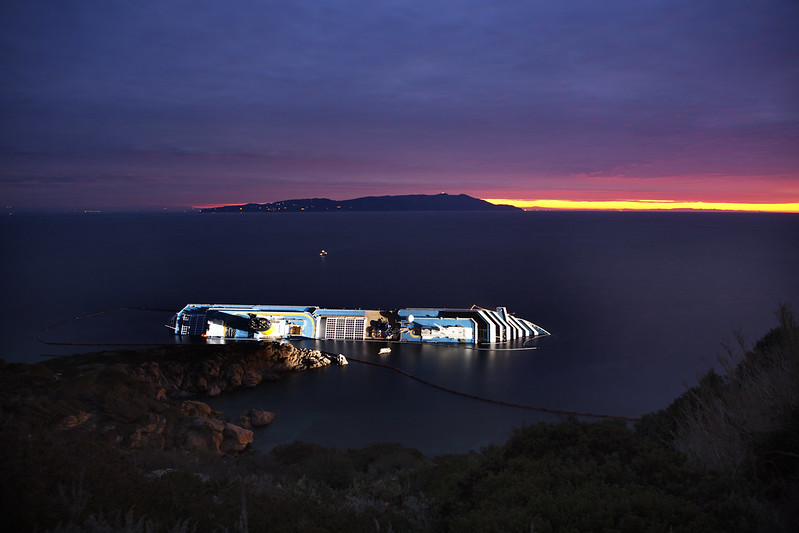
Late in the evening of January 13, 2012, the cruise ship Costa Concordia, carrying more than 4,000 people, struck a rock off the coast of Giglio Island and ran aground near the port. The tragic accident resulted in the deaths of 32 people. In the early hours following the accident, rescue and assistance efforts for the passengers were coordinated by the local civil protection authorities.
Initial response
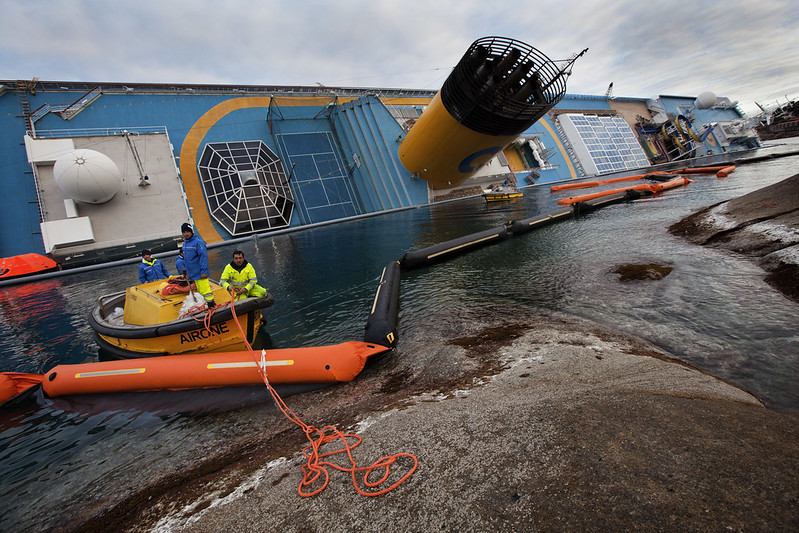
With the declaration of the state of emergency on January 20, 2012, the Head of the Civil Protection Department took charge of coordinating operations according to three priorities: monitoring the ship’s movements, protecting the ecosystem, and searching for the missing. The search for the missing continued throughout the emergency and finally concluded in October 2014, when the last victim was discovered during the ship’s dismantling in Genoa.
Debunkering operation
The first phase of the operation involved securing the wreck by removing the fuel, a process known as debunkering, which was completed two months after the accident. More than 2,000 cubic meters of hydrocarbons were removed, while 240 cubic meters of sewage were recovered, and efforts began to remove debris and other objects from the seabed that had fallen from the ship. Throughout the operations, particular attention was paid to environmental protection: over the course of the two-and-a-half-year operation, ARPAT, ISPRA, and organizations commissioned by Costa Cruises collected 40,000 water and seabed samples, with no significant anomalies detected in the parameters monitored.
Preparatory operations for parbuckling
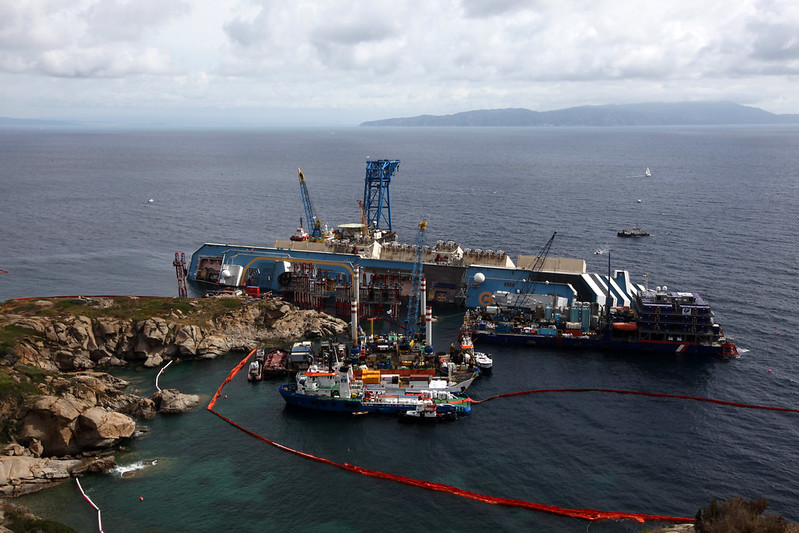
In the summer of 2012, preparatory operations for the rotation of the wreck began, including analyses, core sampling, and drilling, followed by stabilization works, the installation of 11 caissons on the side of the wreck above water, and the construction of a false seabed consisting of six underwater steel platforms designed to provide a stable foundation.
Stabilization
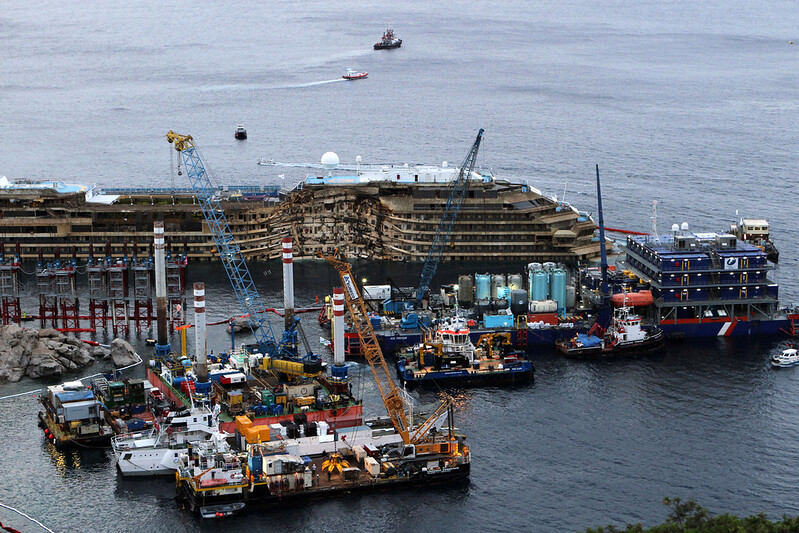
The work to secure the shipwreck, which began following the parbuckling, was completed in December 2013. The Costa Concordia was therefore ready to withstand winter weather conditions. Between April and July 2014, 15 caissons were installed along the previously submerged side of the wreck, while another four were installed on the opposite side.
Refloating
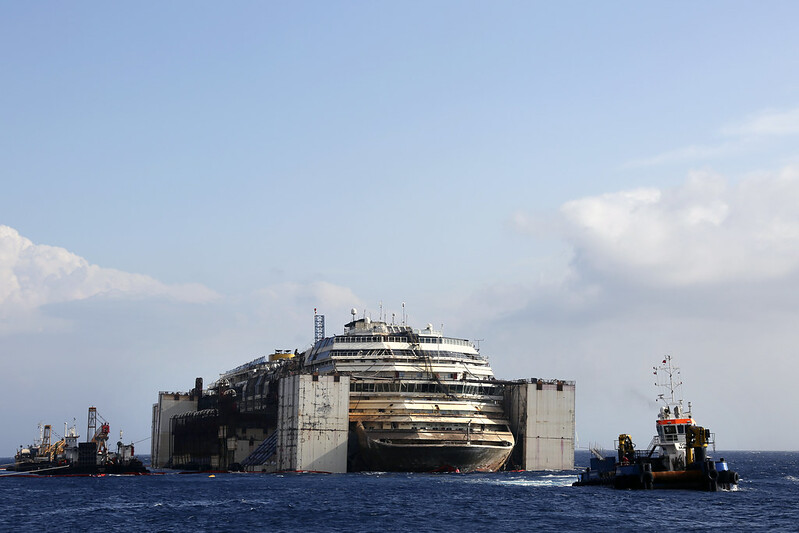
In July 2014, the delicate refloating operation began and lasted for one week. The 30 caissons, which were initially filled with water, were gradually emptied, providing the buoyancy needed to refloat the hull. The Costa Concordia was raised approximately 17 meters.
Departure from Giglio
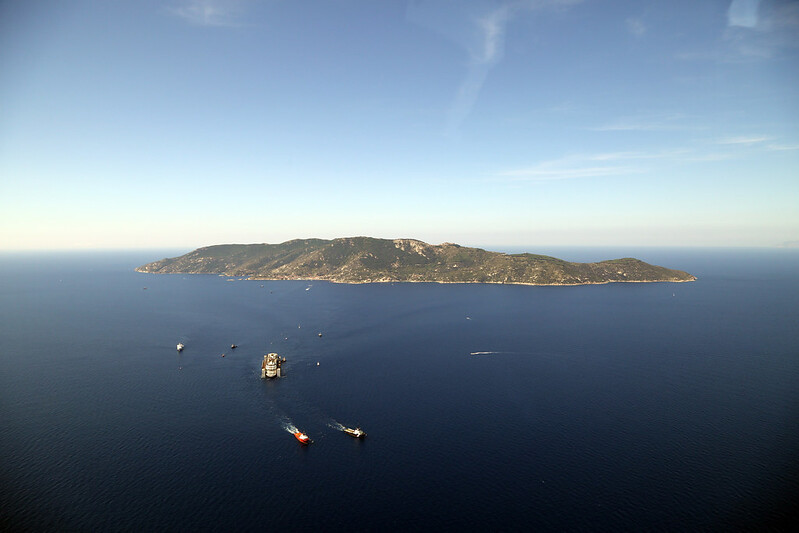
On July 23, 2014, the ship’s horns and the applause of the crowd gathered on the pier marked the Concordia’s departure from the island of Giglio as it set sail for Genoa, towed by two ocean-going tugboats and accompanied by a convoy of vehicles prepared to respond in the event of an emergency.
Arrival in Genoa
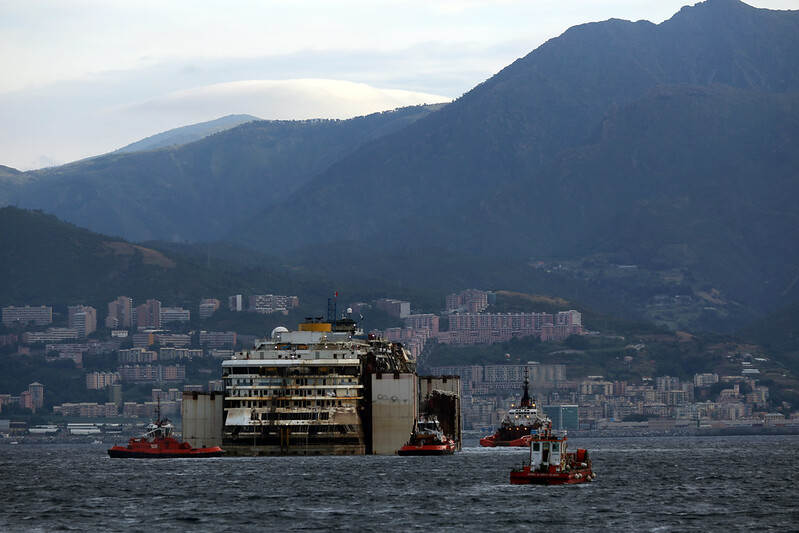
On July 27, 2014, after four days at sea, the ship was moored at the Port of Genoa–Prà-Voltri and handed over to the Saipem–San Giorgio consortium. While the dismantling of the Concordia began in Genoa, cleanup and seabed restoration operations continued on the island of Giglio.
Parbuckling
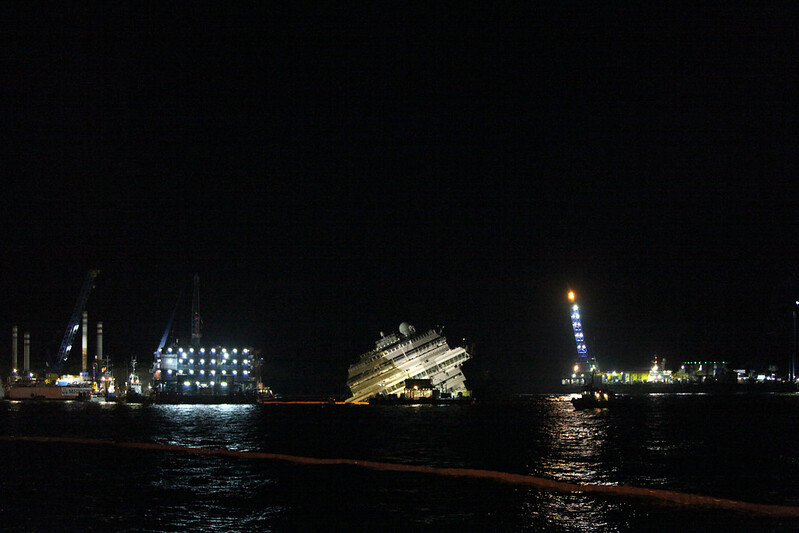
The rotation of the shipwreck, or parbuckling, began on September 16, 2013, at 9:00 a.m. and was successfully completed after 19 hours of operations. The Costa Concordia was brought back to an upright position following a 65-degree rotation, coming to rest on the artificial seabed.